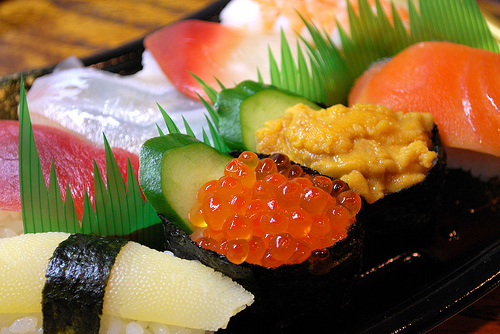
|
|
| Sushi |
|---|
| Photo credit: Yumi Kimura / CC licence |
The kanji writings for sushi, 寿司, 鮨, and 鮓, are ateji (当字), characters given to a word after it was formed. See also Why do some gairaigo words have kanji? for more about ateji
The name sushi comes from sui meaning "acidic", like vinegar, su (酢) in Japanese. The -shi is an adjective ending used with i adjectives (see What is an i adjective?) at the end of sentences.
Sushi means "vinegared rice". It does not mean "raw fish". The food called sushi in Japan is not a dish of raw fish, but a dish of a kind of rice. Raw fish alone, without rice, is called sashimi. The rice used in sushi, sushi-meshi, is made using rice vinegar [o-su (お酢)] and sugar mixed with cooked rice.
Copyright © 1994-2025 Ben Bullock
If you have questions, corrections, or comments, please contact Ben Bullock or use the discussion forum / Privacy policy
|
|
|

|
|
| Book reviews |
Convert Japanese numbers |
Handwritten kanji recognition |
Stroke order diagrams |
Convert Japanese units |